Strategy
I began by analyzing Abe’s advertising data, organizing the campaigns around key performance indicators such as impressions, CTR, CPC, engagement, and conversions. I compared stronger- and weaker-performing creatives to identify patterns in messaging, visual hierarchy, format, and how value was communicated.
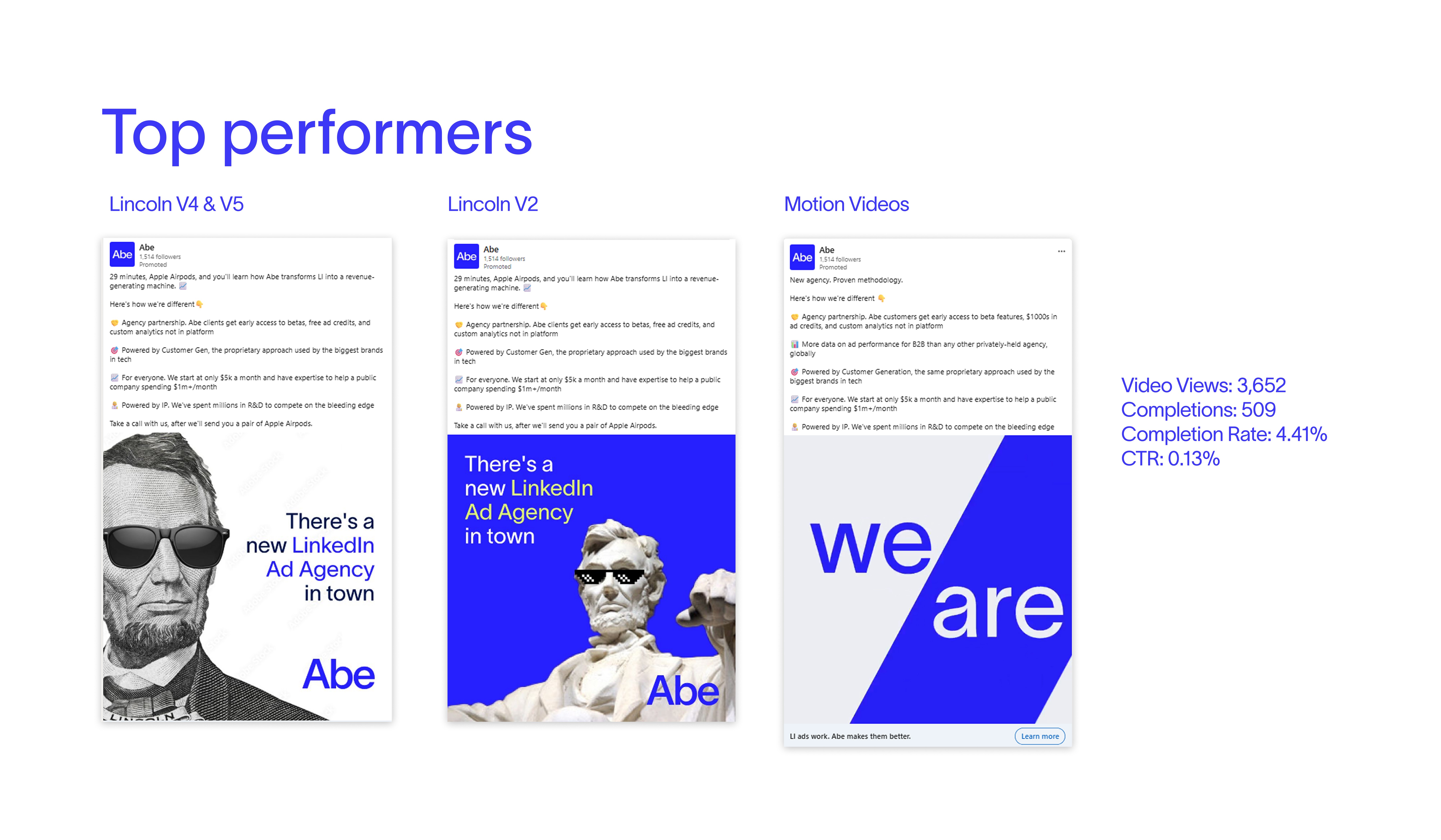
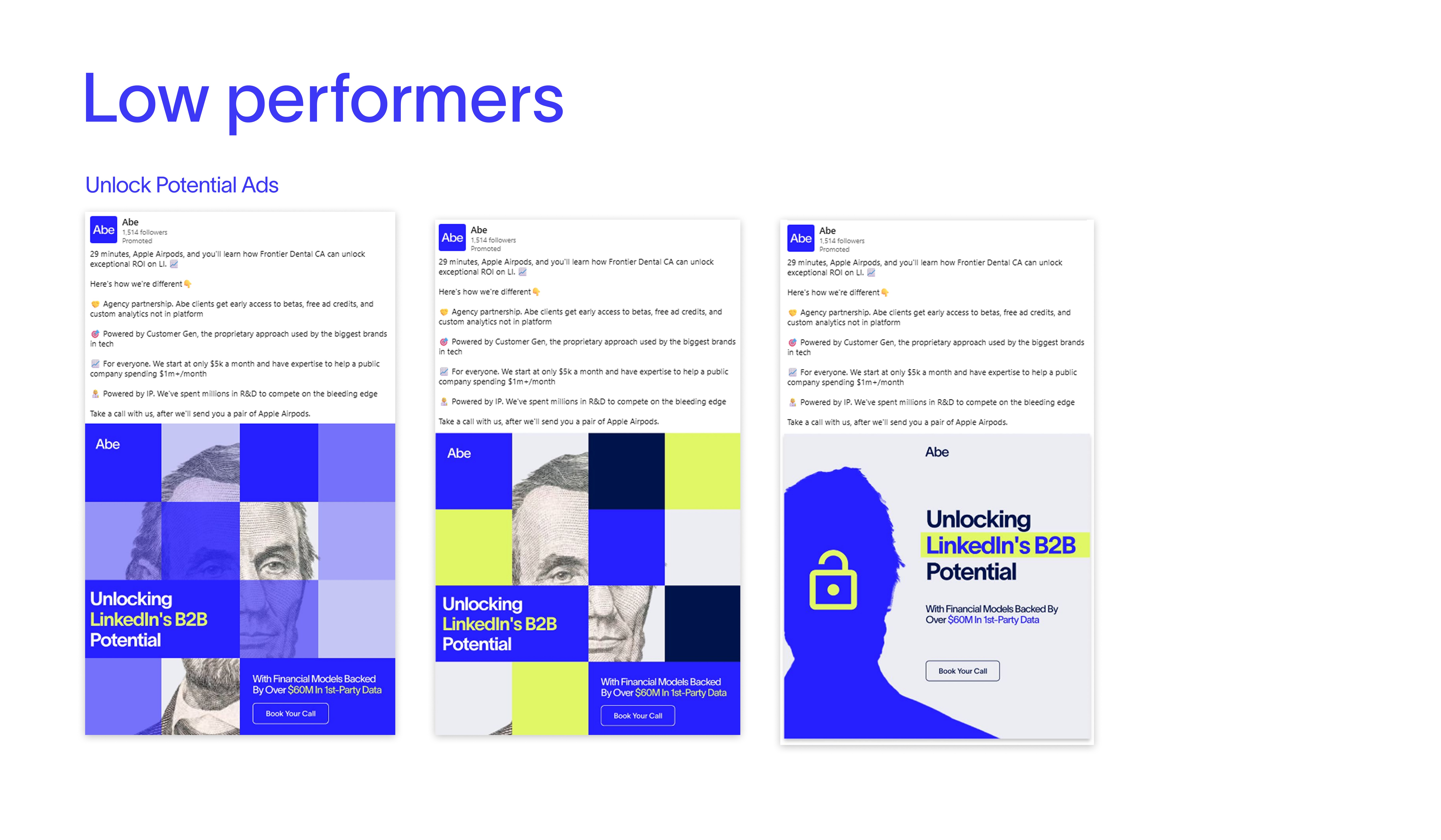
One of the strongest insights was that the highest-performing creative relied on a distinctive visual, minimal copy, and a clear message. At the same time, many of the weaker ads focused heavily on explaining Abe rather than directly addressing the challenges and outcomes B2B marketers care about.
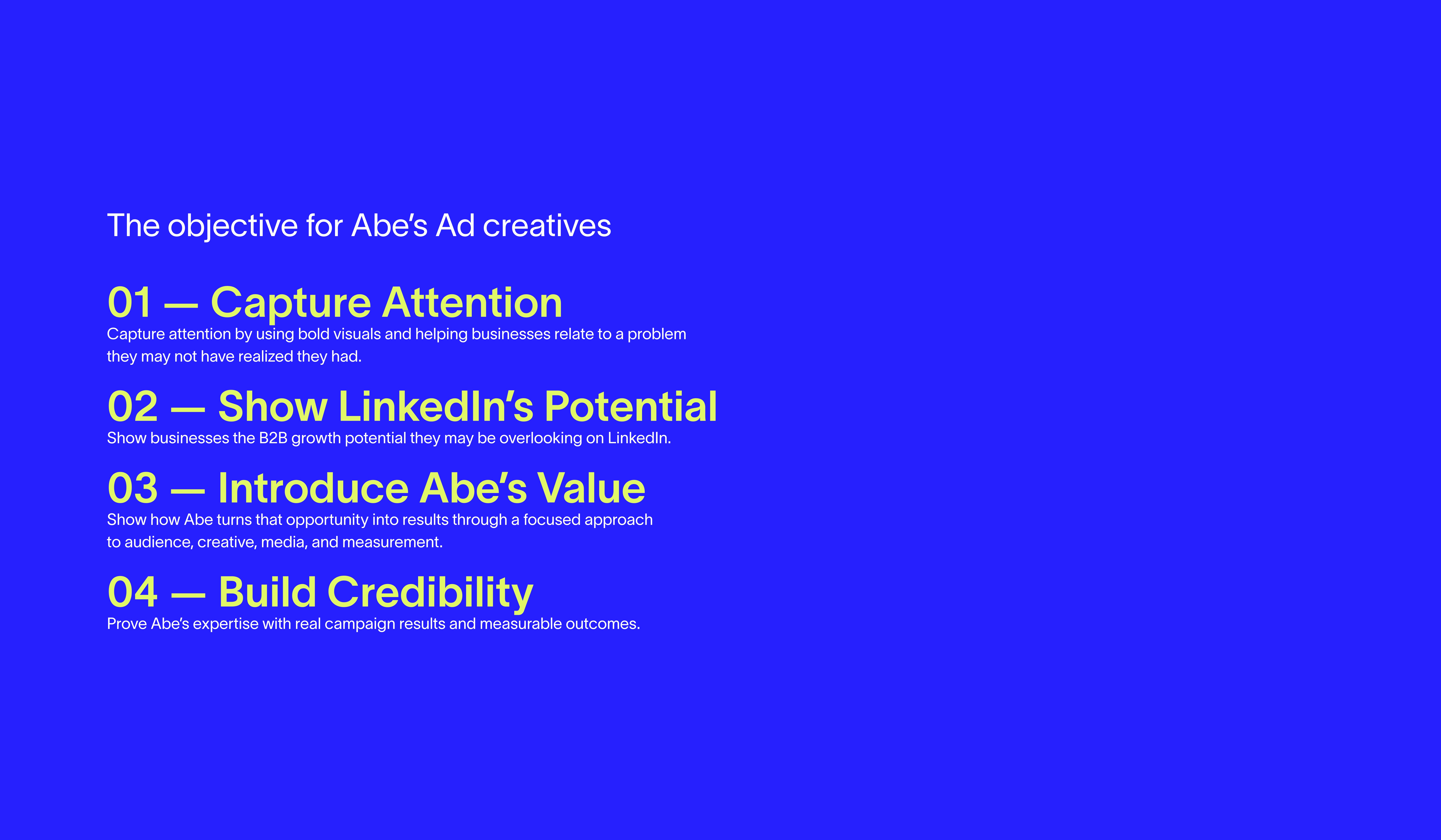
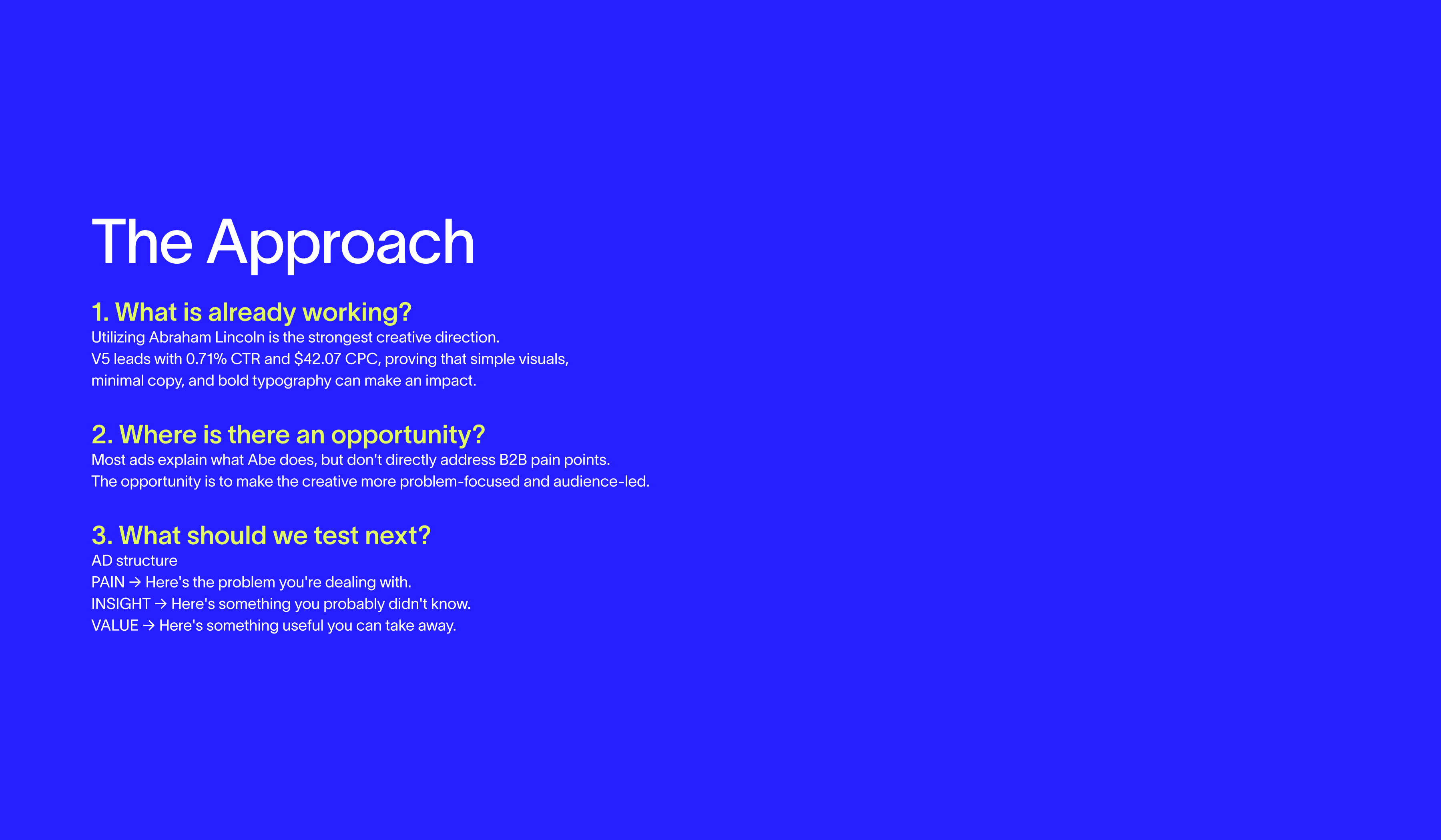

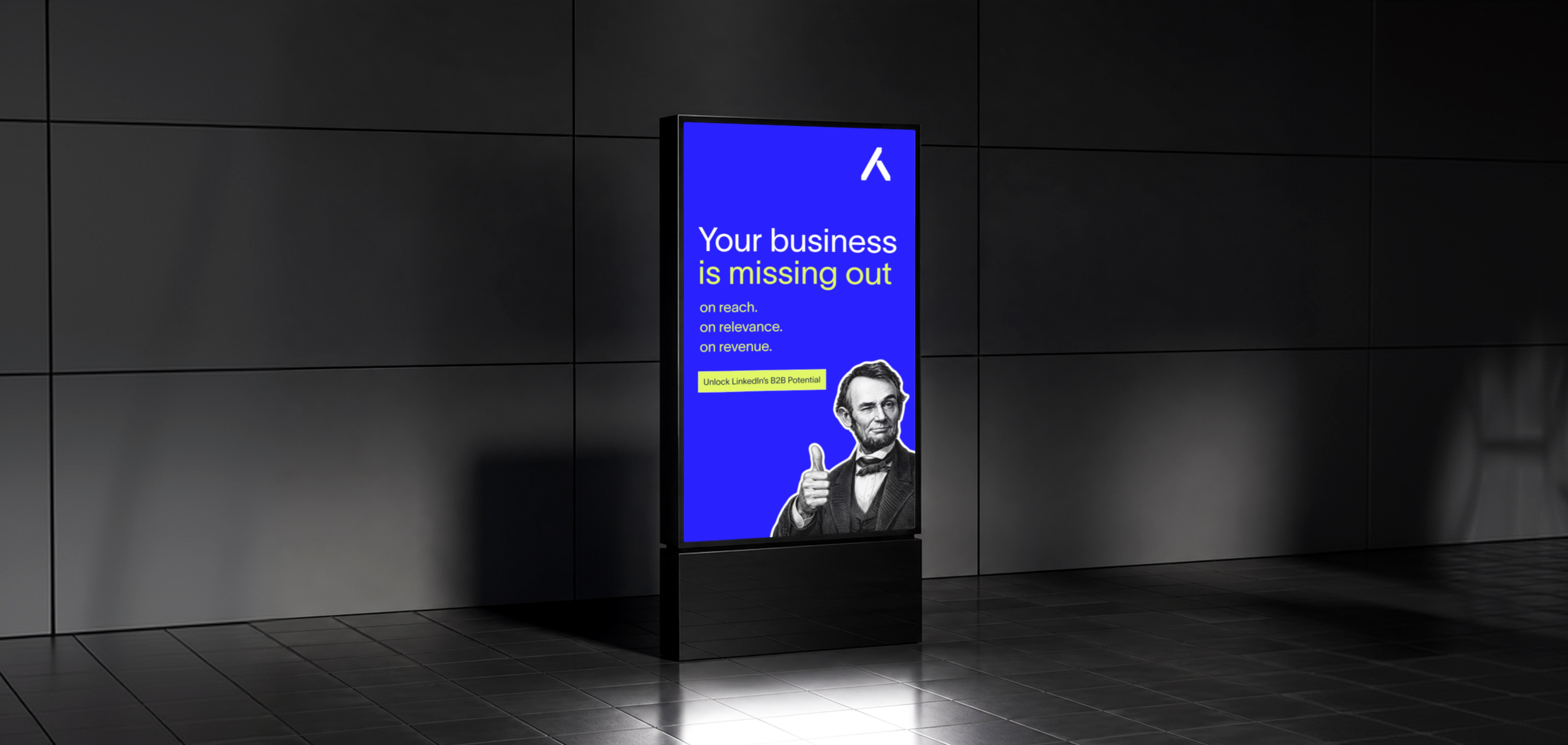
This led to a broader creative strategy built around Pain → Insight → Value. Instead of beginning with “Here’s what Abe does,” the creative would first introduce a problem the audience could recognize, provide an insight or useful piece of information, and then position Abe as the solution.
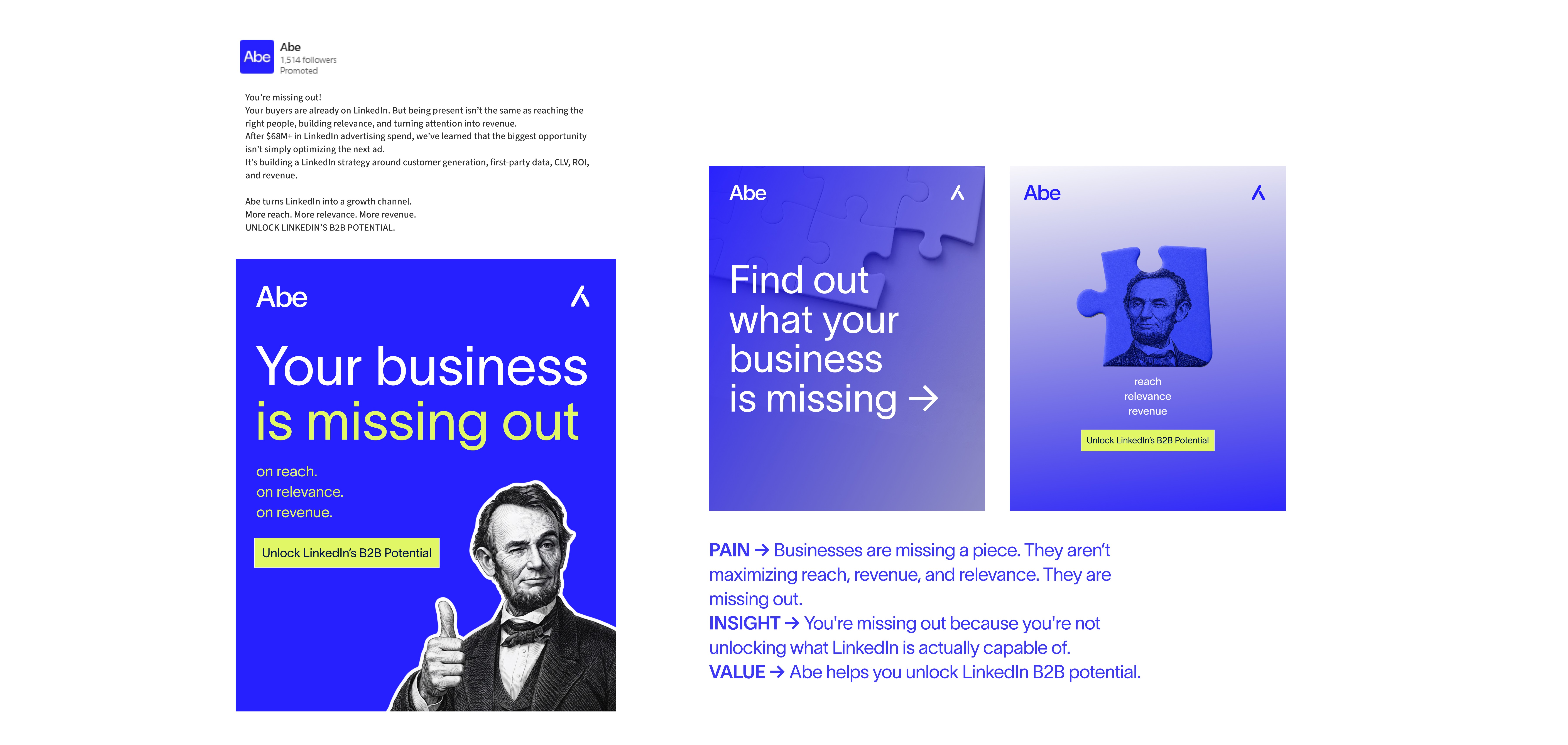
From this strategy, I developed “You’re Missing Out.” The campaign uses a missing puzzle piece as a visual metaphor for the growth opportunities businesses may be leaving on the table—particularly reach, relevance, and revenue. Abe becomes the missing piece that helps businesses unlock more from LinkedIn.
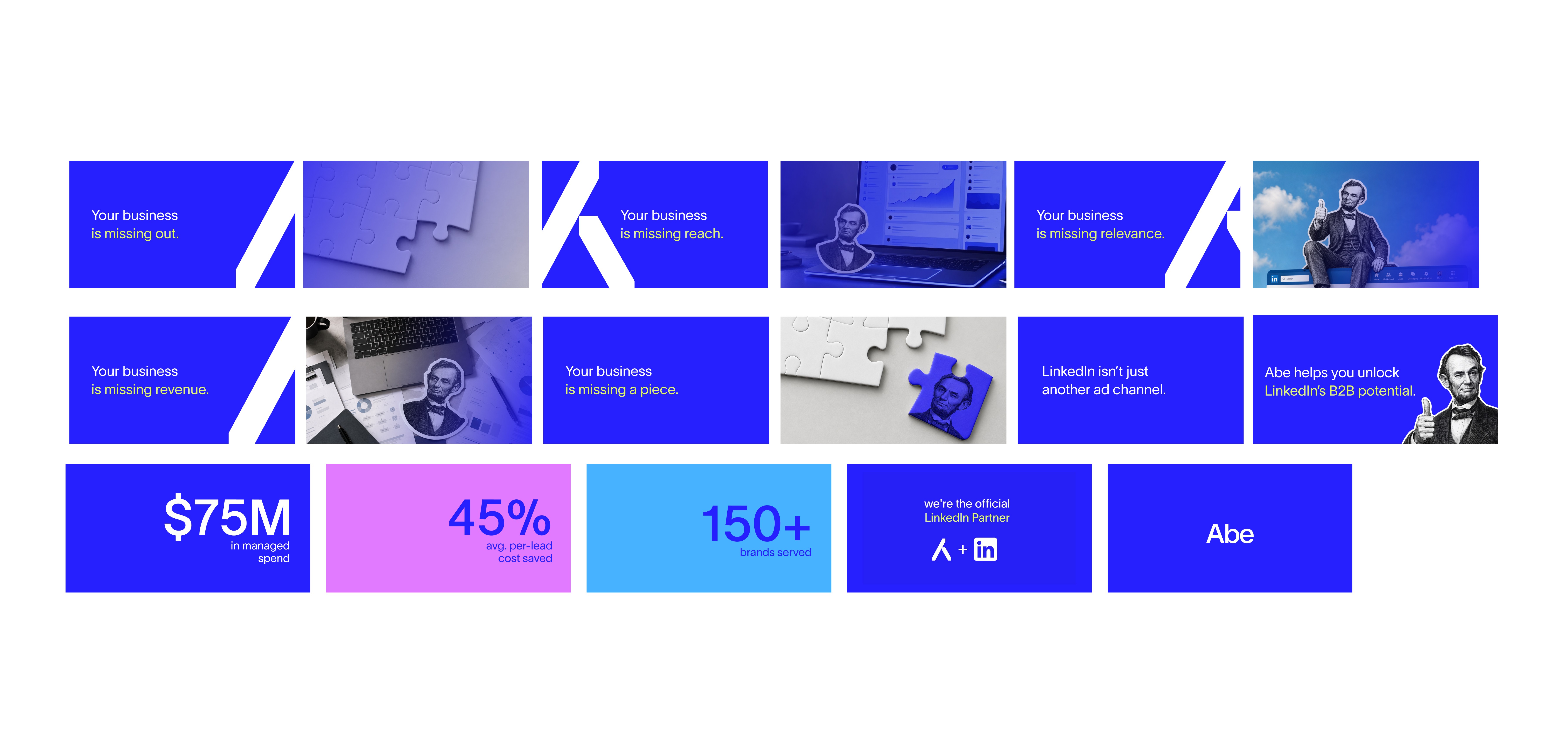
The concept was then expanded across static ads, motion, and a longer-form video. Each format followed the same strategic framework while adapting the storytelling to the medium. The video, for example, moves from the initial problem into the opportunity on LinkedIn, supporting data and proof, and finally Abe’s role in maximizing that opportunity.


Key Takeaways
Performance data can reveal creative opportunities that aren't immediately obvious through visual evaluation alone
The strongest creative isn't necessarily the most informative, it needs to communicate a compelling reason to care
Audience-first messaging can be more effective than leading with the brand or service
A strong creative concept should be flexible enough to translate across multiple formats and campaign touchpoints
Design decisions should be treated as hypotheses that can be tested, measured, and refined based on real audience behavior
Strategy
I began by analyzing Abe’s advertising data, organizing the campaigns around key performance indicators such as impressions, CTR, CPC, engagement, and conversions. I compared stronger- and weaker-performing creatives to identify patterns in messaging, visual hierarchy, format, and how value was communicated.
One of the strongest insights was that the highest-performing creative relied on a distinctive visual, minimal copy, and a clear message. At the same time, many of the weaker ads focused heavily on explaining Abe rather than directly addressing the challenges and outcomes B2B marketers care about.
This led to a broader creative strategy built around Pain → Insight → Value. Instead of beginning with “Here’s what Abe does,” the creative would first introduce a problem the audience could recognize, provide an insight or useful piece of information, and then position Abe as the solution.
From this strategy, I developed “You’re Missing Out.” The campaign uses a missing puzzle piece as a visual metaphor for the growth opportunities businesses may be leaving on the table—particularly reach, relevance, and revenue. Abe becomes the missing piece that helps businesses unlock more from LinkedIn.
The concept was then expanded across static ads, motion, and a longer-form video. Each format followed the same strategic framework while adapting the storytelling to the medium. The video, for example, moves from the initial problem into the opportunity on LinkedIn, supporting data and proof, and finally Abe’s role in maximizing that opportunity.
Key Takeaways
Performance data can reveal creative opportunities that aren't immediately obvious through visual evaluation alone
The strongest creative isn't necessarily the most informative, it needs to communicate a compelling reason to care
Audience-first messaging can be more effective than leading with the brand or service
A strong creative concept should be flexible enough to translate across multiple formats and campaign touchpoints
Design decisions should be treated as hypotheses that can be tested, measured, and refined based on real audience behavior